Powerful SQL Data Management

Discover How CodeMode Leverages SQL for Robust Data Models in Web Platforms and SaaS Applications

We look at SQL Data Solutions through delivery: where it speeds up the build, what it owns in the stack and how it connects to content, integrations and analytics.

Technology focus

Where SQL Data Solutions earns its place in the product

A technology page should explain not only the tool name, but the product value it helps ship faster and cleaner.

Type
Language
Layer
Data
Output
Launch-ready module

Commercial role

Where SQL Data Solutions earns its place in the product

A technology page should explain not only the tool name, but the product value it helps ship faster and cleaner.

01 Build

Implementation without noise

We use the technology where it reduces delivery risk and keeps the product easy to maintain.

02 Integrate

Connected to the business flow

Forms, CRM, payments, content, search and analytics are planned together with the technical layer.

03 Scale

Ready for growth pages

The stack supports SEO pages, events, experiments and future feature expansion without rebuilding the core.

Clean layer

No stack theater

The explanation stays short: SQL Data Solutions is useful when it makes the product clearer, faster or safer to grow.

  • Clear ownership
  • Simple integrations
  • Measured launch

Delivery logic

What we clarify before using SQL Data Solutions

These checks keep the page practical and help estimate scope without overloading the client with implementation detail.

01 Fit

Where it belongs

We define which product layer the technology owns and where another tool would be simpler.

02 Data

What it must exchange

Inputs, outputs, events and integrations are mapped before development starts.

03 UX

How it changes user flow

The technical choice is tied to screens, states, forms, speed and support workflows.

04 Growth

How it scales later

We plan content, analytics and extension points so the next iteration is cheaper.

Industries

Focused markets

Target niches where CodeMode can connect positioning, conversion flow, SEO pages and platform logic into one launch-ready system.

Groups
12
Directions
194
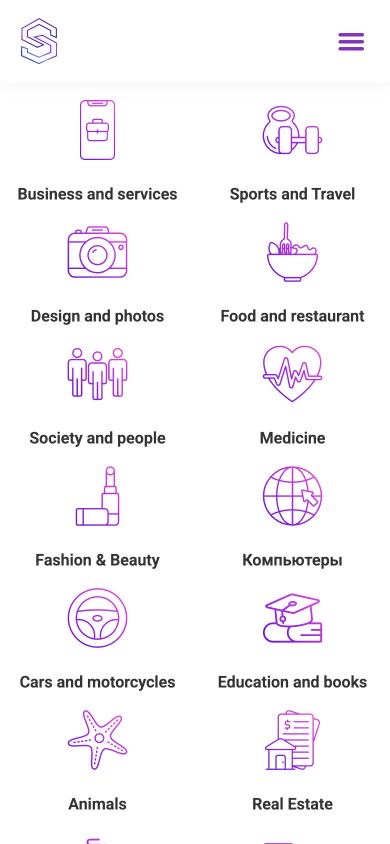
01 Group 22 Directions Healthcare and Medical Medical practices, clinics, telemedicine, therapy, diagnostics and care providers. Open group 02 Group 16 Directions Wellness and Personal Care Beauty, wellness, fitness and personal care businesses with booking and local demand. Open group 03 Group 22 Directions Home and Local Services Local service businesses for homes, repairs, maintenance and service-area operations. Open group 04 Group 14 Directions Construction and Trades Construction companies, contractors, trades, architecture, engineering and property maintenance. Open group 05 Group 14 Directions Real Estate and Property Real estate agencies, property management, rentals, developers and property platforms. Open group 06 Group 16 Directions Professional Services Consulting, agencies, accounting, recruitment, IT services and B2B service providers. Open group 07 Group 16 Directions Legal and Finance Law firms, insurance, fintech, financial services, lending and advisory businesses. Open group 08 Group 14 Directions Education and Training Schools, courses, e-learning, tutoring, training and educational institutions. Open group 09 Group 18 Directions Retail and Ecommerce Retail stores, ecommerce brands, wholesale, subscriptions and online commerce businesses. Open group 10 Group 16 Directions Food and Hospitality Restaurants, cafes, food delivery, hotels, resorts and hospitality groups. Open group 11 Group 14 Directions Travel, Events and Entertainment Travel companies, event businesses, venues, entertainment and experience providers. Open group 12 Group 12 Directions Automotive and Transportation Auto services, dealerships, rentals, repair, towing and transport-related businesses. Open group

Technologies

Practical stack

A practical delivery stack for product interfaces, backend logic, integrations, analytics and scalable content architecture.

Tools
31
Groups
7
06 Language

HTML/CSS

At CodeMode, we specialize in HTML and CSS development, creating responsive and accessible web platforms. Our solutions focus on SEO and user engagement, integrating seamlessly...

Tailwind CSS
Open stack
07 Framework

Yii2/Yii3 Framework

CodeMode harnesses the Yii2/Yii3 framework to create structured PHP backends that underpin web applications, ecommerce sites, and custom marketplace solutions. Our development...

Open stack
08 Framework

Laravel Framework

At CodeMode, we harness the power of Laravel to create web platforms, SaaS, and ecommerce solutions that drive business success. Laravel's elegant framework ensures...

Open stack
09 Framework

Symfony Framework

At CodeMode, we utilize the Symfony framework to create scalable web platforms, SaaS applications, and exceptional backend services. Its flexibility and modularity enable seamless...

Open stack

Next step

Plan a platform around traffic, leads and payments

  • Product version
  • Content structure
  • Integrations
  • Growth pages

CodeMode can shape the first version, content structure, integrations and growth pages before development starts.

Project context

Understanding SQL in Data Engineering

SQL (Structured Query Language) is a powerful tool for managing and manipulating data in relational databases. It is essential for creating reliable schemas, enabling efficient reporting, and implementing search filters. SQL provides the foundation necessary for the analytics events that businesses rely on, especially in dynamic environments like eCommerce and SaaS platforms.

When used effectively, SQL can optimize transactional data processes and improve overall data integrity, ensuring that your web platform makes data-driven decisions with confidence.

Key Product Problems Solved by SQL

  • Data Integrity: Ensures that only valid data enters the system, safeguarding against corruption.
  • Complex Queries: Allows users to execute complex queries for deeper insights into transaction histories and customer behavior.
  • Performance: Optimizes data retrieval processes, reducing loading times for databases with extensive datasets.
  • Scalability: Supports growth, handling increased data volume without sacrificing performance.

When SQL May Not Be the Best Fit

SQL is not a one-size-fits-all solution. For instance, it may be less effective in scenarios requiring highly hierarchical data relationships, such as social networks or graph-based applications. Additionally, applications that prioritize speed in unstructured data access might find NoSQL alternatives preferable.

  1. Assess your data structure to determine the best alignment with SQL capabilities.
  2. Evaluate use cases that might benefit from a more flexible schema approach.

Integrations and Related Tech Stacks

SQL seamlessly integrates with various frameworks and languages, such as Python, Ruby, and Java, allowing for a rich ecosystem of data manipulation. It works well with ETL (Extract, Transform, Load) tools for data migration and analytics platforms that rely on structured data.

SEO and Maintainability Considerations

In the context of search engine optimization (SEO), SQL can help manage website content and metadata efficiently. It allows for the creation of dynamic pages that respond to user queries, enhancing user experience and engagement.

However, maintainability risks can arise if the initial SQL schema design is not robust. Poorly structured data or complex queries may lead to performance slowdowns and increased technical debt over time. Regular maintenance and optimization are crucial.

Next Steps for Implementation

To effectively implement SQL in your project, start by defining your data requirements clearly. This includes establishing data relationships and the types of queries your application will require. Choosing the right relational database system—be it MySQL, PostgreSQL, or SQL Server—can also influence performance and scalability.

Engage your technical team in creating a robust schema and ensure regular audits and adjustments are part of your development cycle. As your business grows, revisit your SQL implementation to adapt to changing needs and leverage new data insights.