
Backend
Service marketplace
Jobox - Service Marketplace for Georgia and Ukraine
Jobox is a service marketplace project for Georgia and Ukraine with category pages, local demand capture, provider discovery and request flows.
- ბაზარი
- Georgia / Ukraine
- ეკრანები
- 2
- სტეკი
- 7
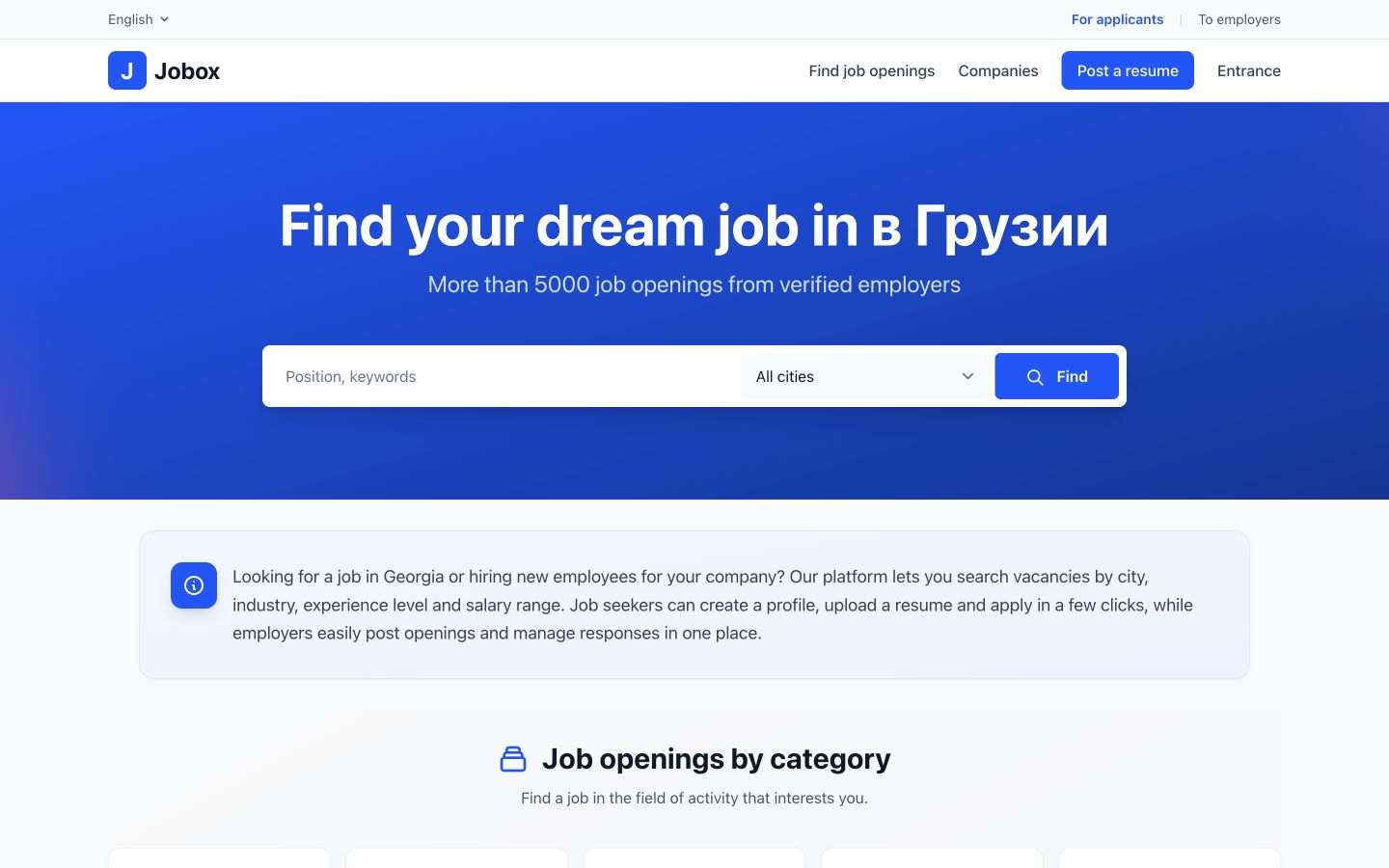
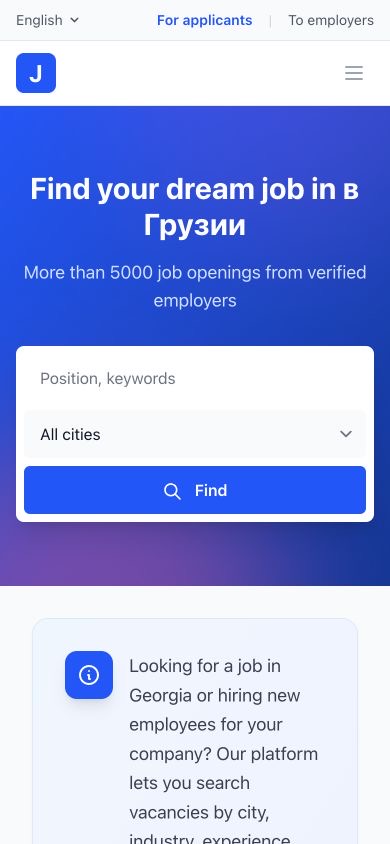
პროექტის ვიზუალი
როგორ გამოიყურება პროექტი
სქრინშოთები აჩვენებს რეალურ პროდუქტს და არა ზოგად დაპირებას.
პროექტის სტეკი
ტექნოლოგიები, რომლებიც გამოყენებულია ქეისში
მონაცემები
Frontend
DevOps
პროექტზე მუშაობა
რა შეიცვალა პროექტში
მოკლედ ვაჩვენებთ ამოცანას, მიზანს, გადაწყვეტას და შედეგს გვერდის სტრუქტურის დეტალებამდე.
01
ამოცანა
A service marketplace for Georgia and Ukraine needed separate local demand paths, provider discovery and request flows.
02
მიზანი
Make categories, locations and provider selection understandable enough for users to send a service request.
03
გადაწყვეტა
We separated marketplace mechanics into service categories, local SEO pages, provider profiles and lead capture around each market.
04
შედეგი
Jobox becomes a focused marketplace case for local services, with a structure that can grow by category and city.
სამუშაოს მოცულობა
- Service categories Users start from the service they need instead of a generic directory.
- Local routes Market and location pages support search demand and navigation.
- Provider path Profiles and forms connect user intent with a concrete request.
ძირითადი სიგნალები
- Project market
- Georgia / Ukraine
- Page type
- Service marketplace
გვერდის სტრუქტურა
როგორ არის ორგანიზებული სამუშაო
ეს ბლოკები აჩვენებს, რას აფასებს მომხმარებელი პროექტში: შეთავაზებას, ნდობას, SEO დაფარვას, განაცხადის გზას და განხორციელების ლოგიკას.
01
Entry logic
First screen and decision path
The first screen must make the marketplace category path obvious before users compare providers.
Project signal
A service marketplace for local categories, provider discovery and request capture. jobox.ge
Market context
Georgia / Ukraine
User path
Users need to choose a service category, understand local relevance and send a request with enough context.
02
Information architecture
Services, categories and page routes
The page structure separates service demand, location context, provider discovery and lead capture.
Service map
Service categories, local routes, provider profiles, request forms and operational controls.
Page logic
The page structure separates service demand, location context, provider discovery and lead capture.
Content blocks
The first screen must make the marketplace category path obvious before users compare providers.
03
Trust and conversion
Proof, CTA and request context
Trust is built through clear categories, provider context and request transparency. The conversion path moves from service selection to request with category and location attached.
Trust layer
Trust is built through clear categories, provider context and request transparency.
CTA path
The conversion path moves from service selection to request with category and location attached.
Request context
Users need to choose a service category, understand local relevance and send a request with enough context.
04
Growth layer
How the structure can scale
The structure can grow by city, service, provider type and local SEO route.
SEO growth
The structure can grow by city, service, provider type and local SEO route.
Operations
Operational views support category quality, lead context and provider management.
Next iteration
The next iteration is richer provider proof, better matching and stronger local service pages.
FAQ ქეისზე
კითხვები, რომლებსაც ქეისი პასუხობს
მოკლე პასუხები იმაზე, რა გაკეთდა, რატომ არის ასეთი სტრუქტურა საჭირო და როგორ შეიძლება მისი გამოყენება მსგავს პროექტში.
01 What does the Jobox case show?
The case shows Jobox as a local service marketplace for Georgia / Ukraine. The page focuses on a marketplace with local service categories, provider discovery and request capture instead of a generic company story.
02 What exactly was built in the project?
The work on Jobox covered service categories, local routes, provider profiles, request forms and operator controls. This connects the visible page, content and user scenarios into one project result.
03 How does the project guide users toward a request?
In Jobox, the conversion logic is that users move from category and location selection to a request with enough context for matching. CTAs, forms and content therefore stay tied to a specific user intent.
04 How do FAQ and structure support SEO and project growth?
For Jobox, the SEO logic is that the structure can grow by city, service, provider type and local SEO route. FAQ adds direct answers to questions users ask before taking action.
05 What can be reused in a similar project?
A similar project can reuse the approach: marketplace data, forms and operational controls support the service request lifecycle. The important part is to preserve what makes Jobox specific: the project is treated separately from Jobvel because the markets and marketplace scenarios are different.